The assignment behind the celebration
Tayshaun Prince was in his second NBA season when the Detroit Pistons won the 2004 championship. That fact makes his place in the title team striking, but youth alone is not the story. He had a job the lineup needed: defend on the wing, contribute without interrupting the offensive structure, and stay useful when postseason possessions became crowded and deliberate. The championship provides an unusually clear example of how a player can matter without becoming his team's primary offensive name.
Detroit defeated Los Angeles in five Finals games. A short description can make the outcome sound inevitable, yet the season and postseason involved changing personnel, difficult opponents, and repeated demands for execution. The proper question is not whether Prince single-handedly stopped the Lakers. It is how his work fitted a five-man defense, a varied offense, and a team willing to win through relationships rather than one dominant scoring hierarchy.
The roster found its balance during the season
The title team combined players who had arrived through different routes. Prince was a Detroit draft selection. Chauncey Billups and Richard Hamilton formed the starting backcourt, while Ben Wallace was central to the team's defensive foundation. Rasheed Wallace's midseason arrival helped complete the familiar starting five. Larry Brown supplied the coaching framework. Listing the names is useful, but the basketball significance lies in how the responsibilities differed.
Prince's size on the perimeter gave the frontcourt another layer of resistance in front of the rim. Offensively, he did not need every possession to be built around him, which left room for Billups to initiate and Hamilton to work through movement. That willingness still required skill. A player who simply avoids the ball can become a weakness; a player who can attack a favorable situation and then make the next pass offers a defense fewer easy choices.
The East was a sequence of different tests
Detroit's route included Milwaukee, New Jersey, and Indiana before the Finals. Those were separate series with different problems, not a long prelude to a trophy presentation. A wing defender has to adjust to the way an opponent enters its offense, the kinds of screens it uses, and the timing of its perimeter movement. Maintaining the same broad identity does not mean applying exactly the same answer in every round.
The New Jersey series reached a seventh game. Indiana then presented another difficult contest for the Eastern Conference title. Prince's chase-down block in Game 2 became the most remembered individual image from that round, but the series demanded far more than one recovery. The significance of the highlight grows when it is placed inside the larger work: keeping a game manageable, preserving defensive assignments, and giving the offense another chance to secure a result.
Los Angeles presented two different stars
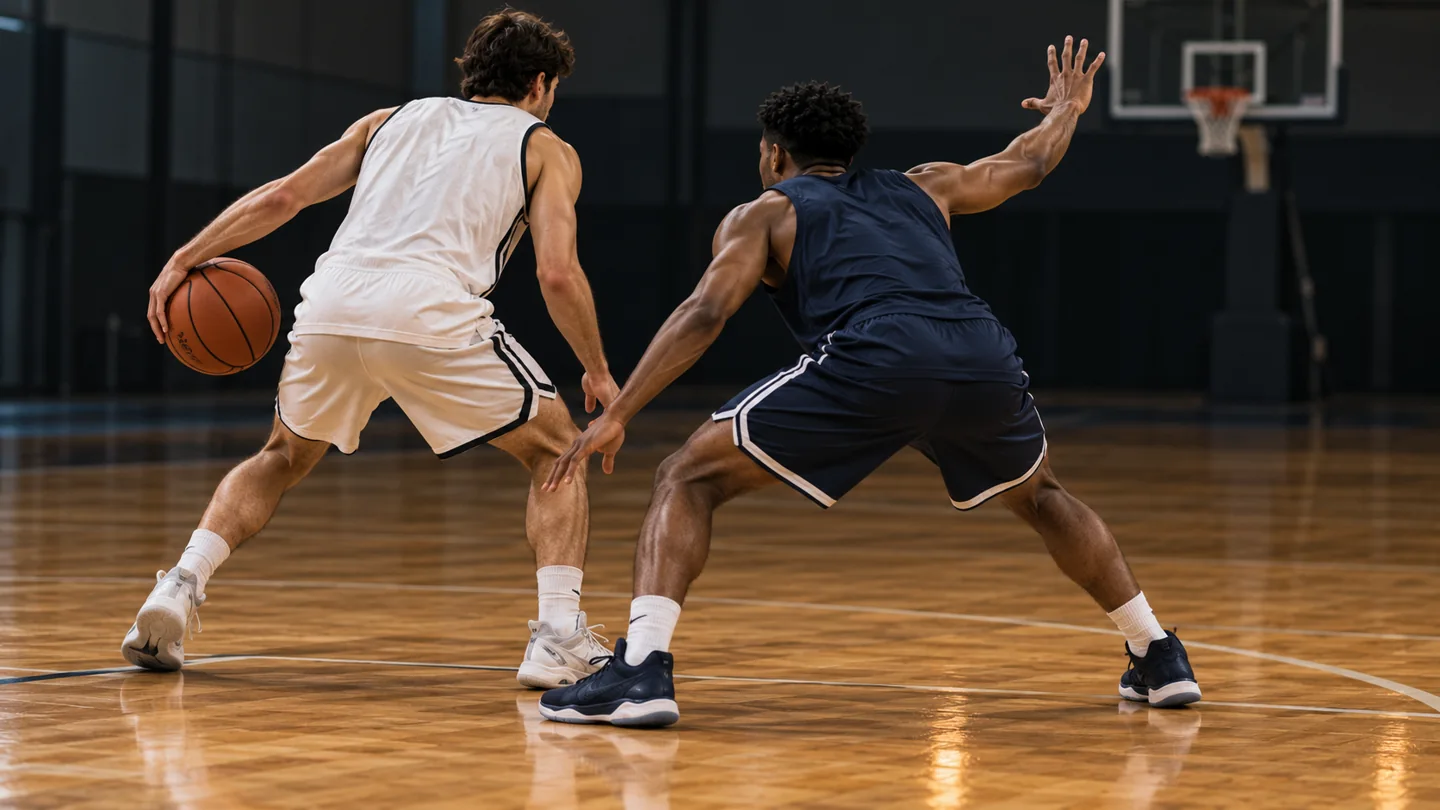
The Lakers' offense featured Shaquille O'Neal and Kobe Bryant, whose strengths required different responses. A defense could not treat a powerful interior scorer and an explosive perimeter creator as versions of the same problem. Prince's wing assignment placed him within Detroit's response to Bryant. His height and reach could complicate the space available for a jumper or a passing angle, while the big men behind him helped define what a drive might encounter.
It would be inaccurate to describe that arrangement as one defender erasing a superstar. Bryant could still make difficult shots, and the Lakers could still punish poor decisions. The more useful analysis asks what attempts the defense was willing to concede and which combinations it wanted to disrupt. Prince's contribution was to make his part of the plan credible, reducing the need for panicked help that would open another avenue. Team defense is strongest when each initial action leaves the next defender a workable decision.
Contesting without abandoning the structure
Length can be valuable because it allows a defender to influence a shot without occupying precisely the same space as the shooter. But it is not a substitute for positioning. A defender who opens the wrong lane can force help to arrive early, creating passes that the offense would otherwise struggle to find. Prince's best defensive value involved combining physical reach with the ability to stay connected to the team's preferred coverage.
That is why the Finals are better understood through possessions than through mythology. The same defender may produce an excellent contest on one trip and need support on the next. The question is whether the arrangement keeps working often enough. Prince helped Detroit maintain a recognizable defensive shape against high-level shot creation. Our playing-style study separates that ordinary discipline from the spectacular recovery plays that attract the most attention.
Offense mattered to the defensive lineup
Detroit could not defend its way to a championship without scoring. Prince's offensive contribution helped keep a valuable defensive player on the floor without making the other four compensate for a completely inactive position. He could use a size advantage, take a shot the possession offered, or move the ball onward. The importance of such decisions increases when the opponent is prepared to load up against a team's most familiar scorers.
There is a difference between modest usage and passive play. Modest usage means the offense usually begins elsewhere. Passive play means a player turns down productive opportunities and lets the defense dictate the outcome. Prince's useful middle ground was to respect the team's priorities while remaining willing to finish or extend an action. That kind of contribution may look secondary in a box score, yet it changes whether a five-player unit can survive close postseason minutes intact.
The series was five games, not a sweep
Detroit won Games 1, 3, 4, and 5; Los Angeles won Game 2 in overtime. Calling the series a literal sweep would be wrong. The distinction matters because the overtime loss shows that the Pistons were not operating outside the ordinary uncertainty of basketball. They had to respond to a defeat and execute again. Their championship was earned through subsequent wins, not through a narrative that removes the Lakers' successful night.
The clincher on June 15 ended 100–87. For readers checking the sequence, the Finals game record gives a cleaner foundation than a nickname or a remembered montage. Results provide the skeleton of the story. Tactical analysis explains why particular players could fit within those results, while acknowledging that no single explanation captures every possession in a series.
What Prince's championship role teaches
The most useful takeaway from Prince's 2004 postseason is not a rule that every champion must copy Detroit. The NBA changes, opponents differ, and a lineup's strengths depend on its personnel. The enduring principle is more modest: a player who connects offense and defense can expand the possibilities available to a team. Prince helped a balanced starting group remain balanced under pressure.
His championship contribution belongs beside the famous block, the Finals matchup, and the teammates whose work was easier to measure. It should be described with enough precision to avoid both exaggeration and dismissal. He was a young wing entrusted with difficult assignments in a title-winning lineup, and he had enough skill to remain useful at both ends. The full career retrospective shows how that role became the foundation for a much longer professional story.
Records & further viewing
Sources checked September 30, 2026. Atmospheric illustrations are AI-generated; no interviews or firsthand access are claimed.